Virtual Tour of Makkah & Madinah: Explore Islam's Holiest Cities in 360°
What You'll Explore
Why Take a Virtual Tour of the Holy Cities?
Makkah and Madinah are the two holiest cities in Islam, drawing over 15 million visitors annually. But for the vast majority of the world's 1.9 billion Muslims, visiting these sacred places is a distant dream — limited by cost, health, visa restrictions, or simply waiting for the right time.
A virtual tour of Makkah and Madinah bridges this gap. Using immersive 360° technology, you can walk through the marble corridors of Masjid al-Haram, see the Kaaba at true scale, explore the Prophet's Mosque (Masjid al-Nabawi), and visit historical landmarks — all from wherever you are.
This isn't a replacement for the real pilgrimage. It is a preparation tool, an educational resource, and a source of spiritual connection for those who haven't yet made the journey.
Makkah: The Blessed City
Makkah (also spelt Mecca) sits in a narrow valley in western Saudi Arabia, surrounded by the Hejaz mountains. It is the birthplace of the Prophet Muhammad (ﷺ) and the site of the first revelation of the Quran.
Key Facts
- Population: ~2 million (swells to over 4 million during Hajj season)
- Elevation: 277 metres above sea level
- Climate: Hot desert — average 40°C in summer
- Restricted: Only Muslims may enter the city of Makkah
- Masjid al-Haram capacity: Over 1.5 million worshippers at peak
Inside Masjid al-Haram
Masjid al-Haram (The Sacred Mosque) is the largest mosque in the world and the heart of Makkah. Our virtual tour lets you explore its key areas:
The Mataf (Tawaf Area)
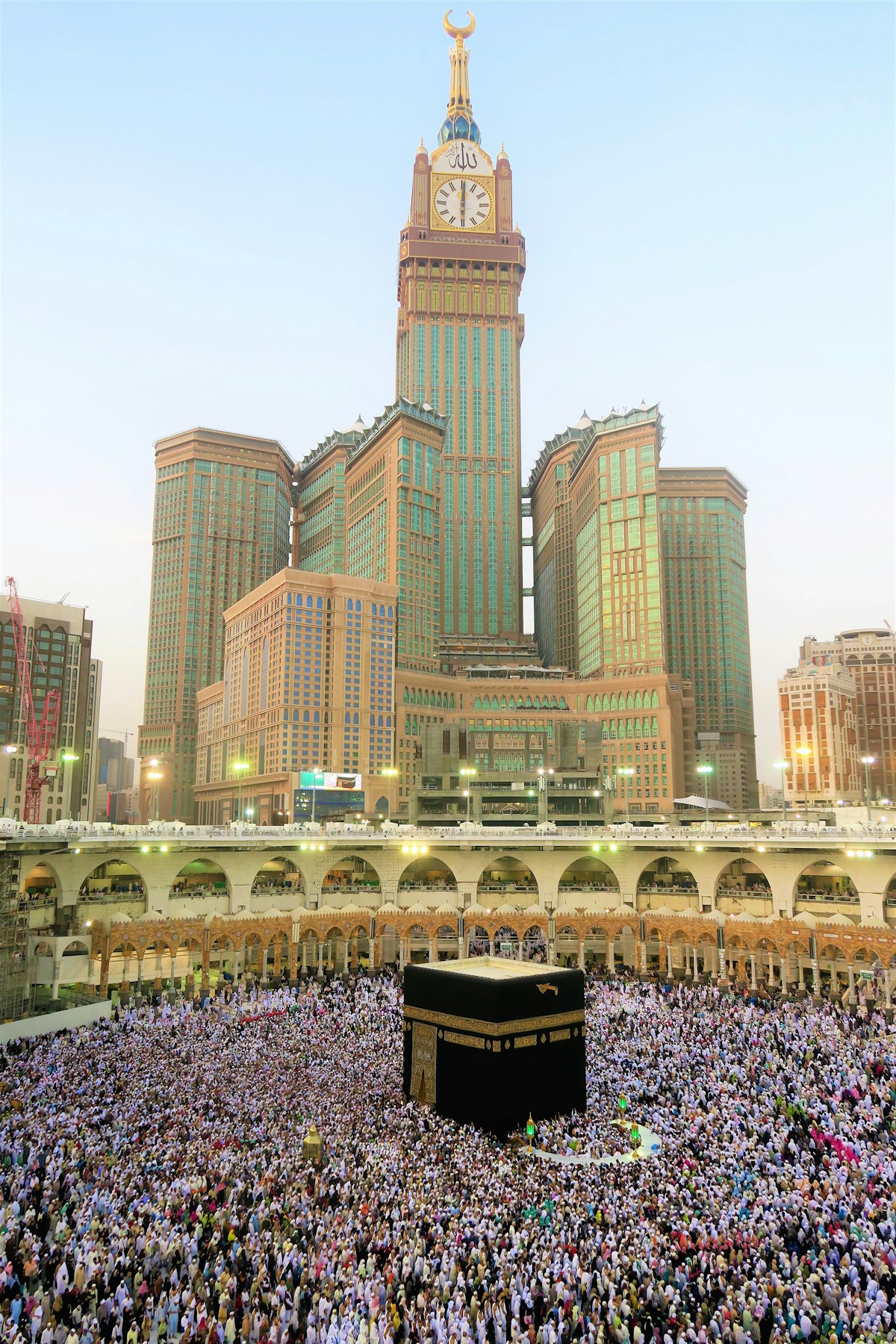
The white marble Mataf surrounds the Kaaba on all sides. In the VR experience, you stand at ground level and see the Kaaba rise before you — an experience that even photographs cannot capture. The immense scale and the flowing movement of pilgrims in Tawaf is one of the most powerful sights in Islam.
The Mas'a (Sa'i Corridor)
The enclosed, air-conditioned corridor between Safa and Marwah stretches 450 metres. In the virtual tour, you can walk the full length, see the green-lit section where men walk briskly, and understand the multi-level layout before your actual visit.
Maqam Ibrahim
The golden enclosure containing the stone bearing the footprints of Prophet Ibrahim (AS) sits just metres from the Kaaba. After Tawaf, pilgrims pray two Rak'ahs behind this station.
The Kaaba Up Close
The Kaaba is a cube-shaped structure draped in the black Kiswah (cloth embroidered with gold Quranic calligraphy). It stands 13.1 metres tall and serves as the Qiblah — the direction all Muslims face in prayer worldwide.
What You See in the Virtual Tour
- The Black Stone (Hajar al-Aswad) — Set in the eastern corner, framed in silver. Pilgrims begin and end Tawaf here.
- The Kiswah — The intricate gold embroidery featuring verses from the Quran, replaced annually on 9th Dhul Hijjah
- The golden door (Bab al-Kaaba) — 2.13 metres above ground, made of 280 kg of pure gold
- Hijr Ismail — The semi-circular wall on the northwest side, originally part of the Kaaba structure
- The Yemeni Corner (al-Rukn al-Yamani) — The southwestern corner, touched (not kissed) by pilgrims during Tawaf
- The Mizab (rain spout) — The gold spout on the roof that channels rainwater
"And [mention] when We made the House a place of return for the people and [a place of] security. And take, [O believers], from the standing place of Abraham a place of prayer." — Quran 2:125
Sacred Landmarks of Makkah
Beyond Masjid al-Haram, Makkah is rich with sites of immense historical and spiritual significance:
Mount Arafat (Jabal al-Rahmah)
The granite hill where the Prophet (ﷺ) delivered his Farewell Sermon. Standing at Arafat is the essential pillar of Hajj. Our virtual tour places you on the plain with a panoramic view of the millions of tents.
Mina — The City of Tents
The vast tent city where pilgrims spend the nights of Hajj. You can explore the Jamarat Bridge where the stoning ritual is performed.
Muzdalifah
The open plain between Arafat and Mina where pilgrims spend the night under the stars after the Day of Arafat.
Jabal al-Nour (Cave of Hira)
The mountain containing the cave where the Prophet (ﷺ) received the first revelation of the Quran. While not part of Hajj or Umrah rituals, it is one of the most visited historical sites.
Jabal Thawr
The mountain with the cave where the Prophet (ﷺ) and Abu Bakr (RA) hid during the Hijra to Madinah.
Madinah: The City of the Prophet
Madinah (also known as al-Madinah al-Munawwarah — "The Radiant City") is located 450 km north of Makkah. It was the Prophet's city of migration and where the Islamic state was first established.
Key Facts
- Population: ~1.5 million
- Visiting Madinah is not part of Hajj or Umrah rituals — but it is highly recommended (Sunnah)
- Prayer in Masjid al-Nabawi equals 1,000 prayers elsewhere (Sahih Bukhari)
- Open to non-Muslims in certain areas, unlike Makkah
Inside Masjid al-Nabawi
The Prophet's Mosque is the second-holiest mosque in Islam. Our virtual tour covers its most significant areas:
The Rawdah
The area between the Prophet's tomb and his Minbar (pulpit) — known as "a garden from the gardens of Paradise." It is marked by green carpet (the rest of the mosque has red carpet) and is one of the most sought-after places for prayer in the world.
The Prophet's Tomb
The resting place of the Prophet Muhammad (ﷺ), along with Abu Bakr (RA) and Umar (RA). Enclosed by golden and green grills and the iconic Green Dome above.
The Green Dome
Originally built in 1279 CE, the dome was painted green in 1837. It is one of the most recognisable symbols in the Islamic world, visible from across the city.
Jannat al-Baqi
The ancient cemetery adjacent to Masjid al-Nabawi where many of the Prophet's companions, family members, and scholars are buried, including Uthman ibn Affan (RA) and the wives of the Prophet (ﷺ).
Masjid Quba
The first mosque ever built in Islam, located in the outskirts of Madinah. Praying two Rak'ahs here is equivalent to performing Umrah in reward (Sunan an-Nasa'i).
Start Your Virtual Tour Now
Whether you're preparing for your first pilgrimage, educating your children about Islam's holiest sites, or simply seeking a spiritual connection — our 360° virtual tours of Makkah and Madinah are free and accessible on any device.
- No VR headset required — works on phone, tablet, or laptop
- VR headset enhanced — use Quest, Vision Pro, or any WebXR device for full immersion
- Scholar-narrated — audio explanations at every landmark
- Self-paced — explore at your own speed, pause and revisit any time